Travel & Adventure
Five British Beaches Worth Travelling For With Your Dog
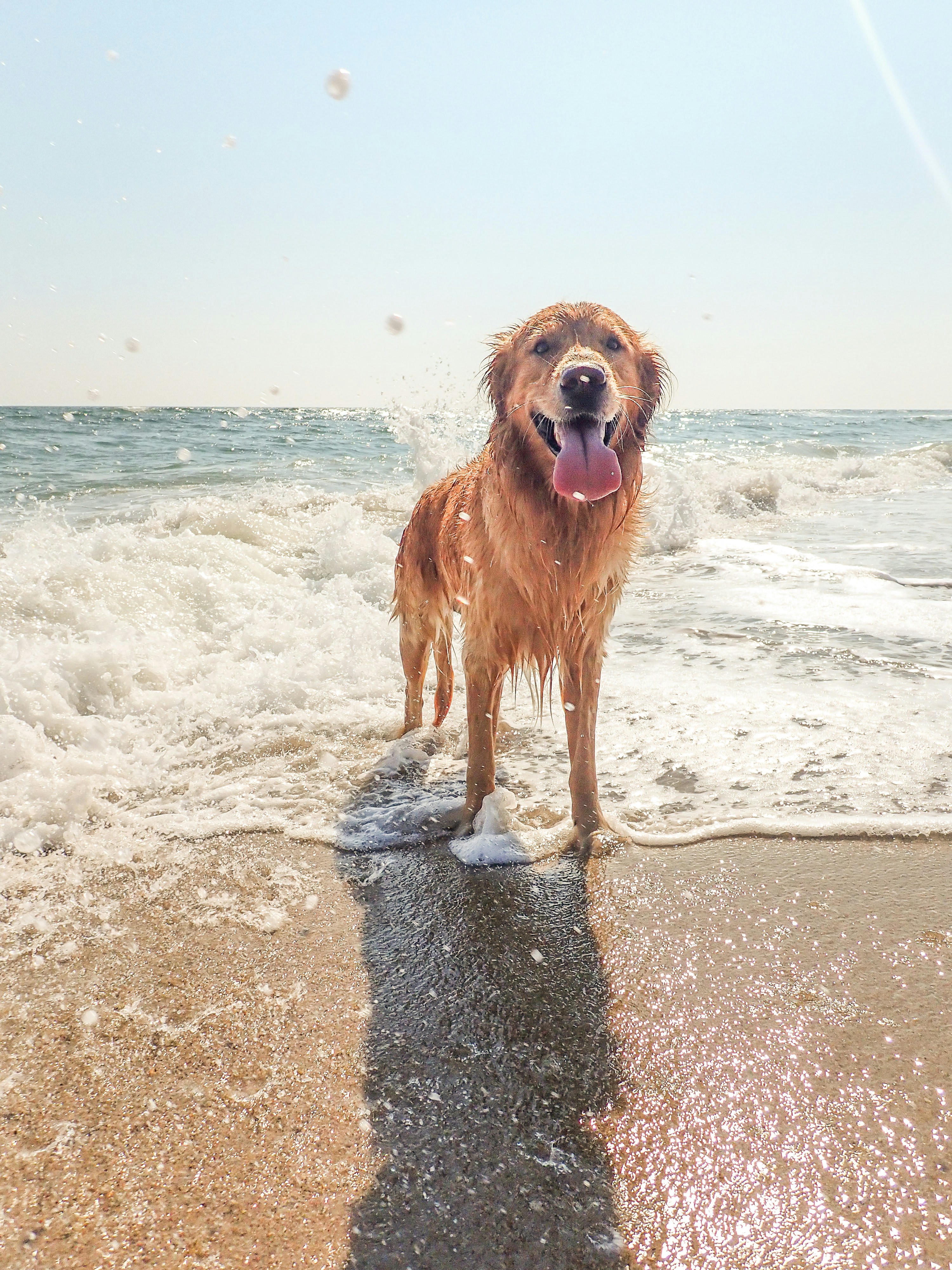
Five beaches, chosen for five very different reasons.
A beach can describe itself as dog-friendly and still be a fairly disappointing place to take one.
The dog-friendly section may be squeezed into one end. Summer restrictions can turn a spontaneous visit into a study of council signage. The beach itself may be lovely, but reached by steps that an older dog cannot manage. At the other extreme, a famous stretch of sand may be so busy that letting a dog run feels impossible.
These five offer something more.
One has wide tidal flats made for paddling. Another sits four miles from the nearest road. There is a beach beneath a castle, a sweep of white Hebridean sand and three miles of Welsh coastline for dogs who prefer a proper walk to an afternoon lying down.
They are not all easy to reach, and they will not suit every dog. That is part of the choice.

Holkham Beach, Norfolk
Best for paddling
Holkham does not reveal itself immediately. From the car park, the route takes you towards the pinewoods and out through the nature reserve before the view opens properly.
The amount of sand is difficult to judge at first. At low tide, the water retreats across the bay and leaves behind firm wet sand broken up by shallow pools. A dog can splash around the edges without needing to swim, while those who dislike water have more than enough dry ground to explore.
The busiest patch tends to be the one nearest the main route onto the beach. Many visitors remain there. Continue walking and the gaps between people usually begin to widen.
The beach is open to dogs all year. It is also part of a national nature reserve where birds nest directly on the ground, often so well camouflaged that walkers would never know they were there.
Between 1 April and 31 August, dogs must be kept on leads in the most vulnerable nesting areas. Other sections remain available for off-lead walking under close control, and temporary cordons protect nests on the sand and shingle.
The zones are marked, but it is worth looking at the current map before setting out rather than trying to work it out once you arrive.
Tide matters here too. At low tide, the water can appear deceptively distant; once it turns, the channels across the bay begin to fill again. Check the tide times before leaving the car park and stay close to any dog entering the water.
It is easy to spend several hours at Holkham without covering the same ground twice. The walk through the pines adds another part to the day, and dogs who like shallow water will find plenty of it when the tide is right.

Sandwood Bay, Sutherland
Best for escaping the crowds
Sandwood is not somewhere you visit on the way to something else.
There is no road to the beach. The usual route begins at Blairmore and crosses four miles of exposed moorland before reaching the bay. The return journey makes it an eight-mile day before any wandering on the sand has been counted.
The path is established, but parts can be uneven and wet. Highland weather can also change with little interest in what the forecast promised that morning.
Although the route feels remote, this is working crofting land. The John Muir Trust asks people to keep dogs on leads throughout the estate, close gates behind them and avoid disturbing livestock or anyone working nearby.
Blairmore has toilets. Beyond the car park, there is nowhere to refill a bottle, buy food or take shelter with a tired dog. Everything needed for the walk out and back has to be carried from the start.
That makes Sandwood a poor choice for a dog who struggles with distance, rougher ground or long days away from facilities. For a fit dog and an owner prepared for the walk, it offers something increasingly difficult to find.
The bay only comes into view towards the end of the route. On a quieter day, the people who made the walk with you may be the only others there. The beach runs between high dunes and rocky headlands, with the narrow sea stack of Am Buachaille standing offshore.
There is still a four-mile walk back to Blairmore, so the time spent on the beach needs to leave something in reserve.

Bamburgh Beach, Northumberland
Best for year-round freedom
Bamburgh is the uncomplicated one.
Dogs are welcome throughout the year and, at the time of writing, the beach has no advertised seasonal exclusion zones. There is no summer timetable to remember and no small dog-friendly section hidden beyond a line of signs.
There is simply a long sweep of sand with Bamburgh Castle above it.
The castle changes the whole character of the walk. From some directions it sits ahead of you, dark against the sky. Turn around later and it appears behind the dunes, looking far too theatrical to be part of an ordinary dog walk.
Most visitors gather near the easiest paths onto the beach and beneath the castle. Beyond those points, the sand continues and the crowd begins to spread out. Lower tide leaves a firmer surface, which can be useful for dogs and people who find deep, loose sand tiring.
Unlike the more remote beaches in this list, Bamburgh has a village close by. Parking is available near the coast and there are places to eat or stop for a drink after the walk. Several welcome dogs, but it is sensible to check each venue’s policy before turning up covered in sand and seawater.
The usual responsibilities still apply. Dogs should remain under control around wildlife, horses and other beach users, and any instructions displayed locally take priority over information read before the journey.
Its appeal is partly how little organising is required. Arrive, follow one of the paths through the dunes and choose which direction to walk.

Luskentyre, Isle of Harris
Best backdrop
Some beaches need flattering weather and a skilled photographer. Luskentyre does not have that problem.
The sand is strikingly pale, the water shifts between blue and turquoise, and the hills of Harris rise behind it. As the tide moves through the bay, channels appear across the sand and alter the view again.
It barely looks British. The wind usually resolves any confusion.
Getting there takes some effort. A journey from the mainland will usually involve a ferry followed by a drive across Harris, while other routes through the Outer Hebrides can make the travelling longer still. This is a beach to build into a trip rather than squeeze into an afternoon.
Dogs are commonly welcomed on the beach throughout the year, but this is a crofting landscape. Sheep, Highland cattle and ponies may be nearby, sometimes on land that appears open and empty from a distance. Keep a lead ready and use it around livestock, following any signs or requests from local landowners.
The beach is wide enough for a substantial walk, although changing tides can reshape the available route. Check conditions before heading too far around the bay and do not assume that clear, tropical-looking water will be warm or gentle.
The photographs tend to concentrate on the sand and water, but the mountains do much of the work once you are there. They remain in view across the bay and make stopping to look back a regular part of the walk.

Rhossili Bay, Gower
Best for a long walk
At Rhossili, the view arrives before the beach does.
From the clifftop, the bay stretches for roughly three miles towards Burry Holms. The descent brings you onto an open sweep of sand, with enough distance for a dog who is happiest when a beach walk feels like an actual walk.
Dogs can use Rhossili Beach at any time of year. You can remain on the sand or pick up one of the longer routes across the surrounding headland and Gower coast.
The main drawback is the path between the village and the beach. It is steep in both directions, and the climb back feels considerably longer after a few miles on the sand. Older dogs, dogs with joint problems and anyone visiting in warm weather may be better admiring the bay from above.
Livestock, including free-roaming sheep and ponies, can be encountered away from the beach. Dogs must be kept on leads when crossing farmland and under reliable control elsewhere.
The Atlantic water needs respect as well. Surf and currents can be strong, and there is no reason for a dog to swim simply because they have reached the sea. Paddling at the edge may be more than enough. If conditions look doubtful, keep them out.
For a dog who loves distance, Rhossili offers choices: straight along the sand, up onto the coastal path or a longer route across the surrounding headland. Just save enough energy for the path back to the car.
Before setting off
Beach rules change. Nesting birds arrive, livestock moves and local authorities amend restrictions. Check the landowner or council website shortly before travelling, then follow the signs you find on the day.
The same is true of the available sand. Check the tide table rather than judging the route from how it looks when you arrive. Water can cover return paths, cut off sandbanks and turn a wide beach into a much narrower strip.
Take fresh water rather than allowing a thirsty dog to drink from the sea. Bring more than you expect to need on remote routes, along with waste bags that will make it all the way back to a bin. On warmer days, remember that exposed sand offers very little shade.
Most importantly, choose for the dog you have. Sandwood’s eight-mile walk may be perfect for one and miserable for another. A busy access point may overwhelm an anxious dog, while a steep path could turn an otherwise beautiful visit into an ordeal.
The best beach is not necessarily the wildest or the most photographed.
It is the one where both of you can enjoy being there.